

How Does a Fire Sprinkler System Work in a Building?
When we imagine building safety, we often think of smoke alarms, fire extinguishers, and exit signs. Yet, behind the scenes, one silent guardian stands ready 24/7 to protect lives and property: the automated fire sprinkler system. Despite being a standard feature in modern office towers, apartments, hotels, and industrial facilities, fire sprinklers remain widely misunderstood due to movie tropes and action film myths.
Understanding how a fire sprinkler system actually works is essential for property owners, facility managers, and everyday residents. Beyond meeting municipal building codes, a reliable fire sprinkler system is the single most effective line of defense against catastrophic property loss and life-threatening fires.
Dispelling the Hollywood Myth: Individual Heat Activation
One of the most pervasive myths popularized by movies is that a single puff of smoke or a pull of a fire alarm triggers every sprinkler head in the building at once, drenching everything in sight. In reality, fire sprinkler systems are far more sophisticated, targeted, and efficient.
Fire sprinklers are activated by heat, not smoke. Each sprinkler head functions as an independent, heat-sensitive valve. Inside the head sits a small, liquid-filled glass bulb or a fusible metal link holding a water seal in place. When a fire breaks out, hot air rises toward the ceiling. Once the air surrounding a specific sprinkler head reaches a pre-determined temperature—typically between 135°F and 165°F (57°C to 74°C)—the liquid inside the bulb expands, shattering the glass or melting the link.
Only the specific sprinkler head directly exposed to extreme heat opens up, releasing pressurized water directly onto the source of the flames. In over 80% of fire incidents, a single sprinkler head is all that is required to extinguish or contain the blaze before firefighters even arrive.
The Inner Workings: From Water Supply to Suppression
To appreciate the reliability of a fire sprinkler system, it helps to trace the journey of water from the main supply line to the overhead deflector. The system operates on a continuous, pressure-balanced mechanical framework:
-
The Pressurized Network: A network of dedicated piping runs behind walls and above ceilings, kept constantly filled with pressurized water (in wet-pipe systems) or compressed air (in dry-pipe systems used for freezing environments).
-
The Alarm Valve and Flow Switch: When a sprinkler head opens and water begins to flow, the sudden drop in pipe pressure triggers a mechanical alarm valve or water flow switch. This immediately sends an automatic signal to the central alarm panel, notifying emergency services and sounding building evacuation alarms.
-
The Deflector Mechanism: As water shoots out of the open orifice at high pressure, it hits a notched metal plate known as the deflector. The deflector shapes the stream into a wide, uniform umbrella pattern, maximizing water coverage to smother the fire and cool the surrounding air.
By controlling heat and suppressing flames at the localized point of origin, sprinklers prevent the fire from spreading to neighboring rooms, drastically reducing structural damage and toxic smoke accumulation.
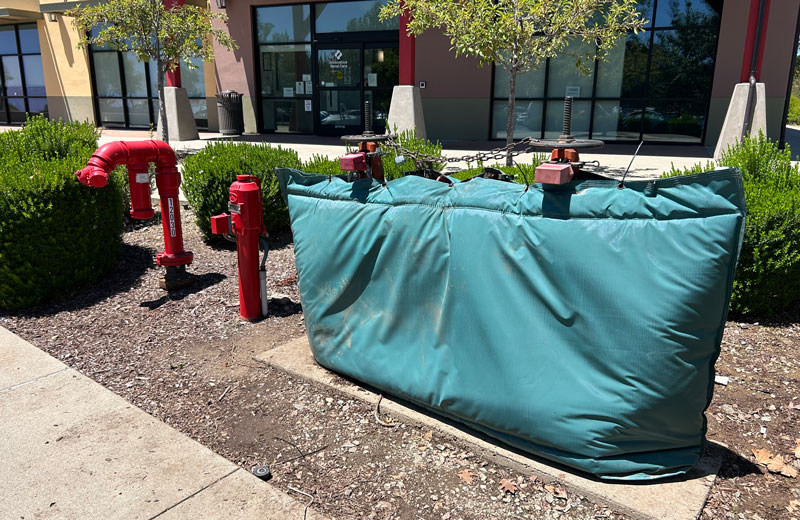
Real-Life Impact: Protecting Lives, Property, and Peace of Mind
For business owners and homeowners alike, the presence of an operational fire sprinkler system changes the outcome of a fire emergency entirely. Fire spreads exponentially, often doubling in size every minute. While municipal fire departments respond as quickly as possible, transit time and setup can take several critical minutes.
Fire sprinklers act as immediate first responders. According to global fire safety statistics, the risk of dying in a home fire is reduced by over 80% when sprinklers are present, and property damage is reduced by up to 70%. Furthermore, because sprinklers deploy significantly less water than a firefighter’s high-pressure hose line, water damage from an activated sprinkler is a small fraction of what it would be during manual firefighting efforts.
Ensuring Maximum Reliability with Hydrotek Solutions
A fire sprinkler system is only as reliable as the quality of its components and regular maintenance. Over time, valves, pipe networks, and pressure control mechanisms must withstand constant hydrostatic pressure without leaking or degrading.
For property developers, contractors, and building management professionals seeking uncompromised safety standards, Hydrotek provides industry-leading fire protection components and fluid control solutions. Hydrotek specializes in manufacturing high-precision fire safety valves, heavy-duty piping hardware, and reliable flow control devices engineered to meet rigorous international safety standards.
By integrating Hydrotek components into your building’s fire protection infrastructure, you ensure seamless pressure management, corrosion resistance, and instantaneous response when seconds count most. Whether retrofitting an existing property or building a modern multi-story complex, Hydrotek supplies the dependable hardware required to keep life-safety systems operating at peak performance.
A Worthwhile Investment in Life Safety
A fire sprinkler system is far more than an architectural requirement—it is an automated, life-saving investment that works silently around the clock. By dispelling common misconceptions and investing in high-quality systems from trusted partners like Hydrotek, building owners can safeguard their investments and provide ultimate peace of mind for everyone who steps inside.