

Annual Fire Sprinkler Inspection: Compliance Rules for Warehouses And Factories
When managing a bustling warehouse or manufacturing plant, operational focus naturally shifts toward supply chain efficiency, inventory turnover, and workforce productivity. However, behind every smooth shift lies a silent guardian that keeps your team, facility, and assets protected: your fire sprinkler system. In commercial and industrial settings, a properly functioning automatic sprinkler system is often the single line of defense against catastrophic property loss or injury.
Ensuring this critical system works when every second counts requires far more than basic visual checks. Annual fire sprinkler inspections are strict legal mandates designed to maintain commercial compliance, safeguard lives, and protect business continuity. Understanding these compliance rules helps facility managers stay ahead of regulatory obligations while building a safer, more resilient workplace.
Why Annual Compliance Matters for Industrial Facilities
Warehouses and manufacturing plants present unique fire hazards compared to standard office buildings. High-bay storage, densely packed pallet racks, combustible dusts, flammable liquids, and heat-generating machinery significantly elevate the speed and intensity at which a fire can spread. A fire sprinkler system is designed to detect heat and suppress or contain a blaze early, giving occupants crucial time to evacuate and firefighters time to respond.
Without regular maintenance, complex sprinkler systems can slowly suffer from corrosion, clogged pipes, stuck valves, or mechanical wear. National and local fire codes demand documented annual inspections to ensure that every mechanical component functions as intended under pressure. Failing to remain compliant risks severe fines, potential facility shutdowns by local fire marshals, and denied insurance claims in the event of an emergency.
Key Components of an Annual Fire Sprinkler Inspection
An annual inspection is a comprehensive, hands-on evaluation conducted by licensed fire protection professionals. It goes well beyond looking at visible pipework from the warehouse floor and involves rigorous physical testing of mechanical and hydraulic components.
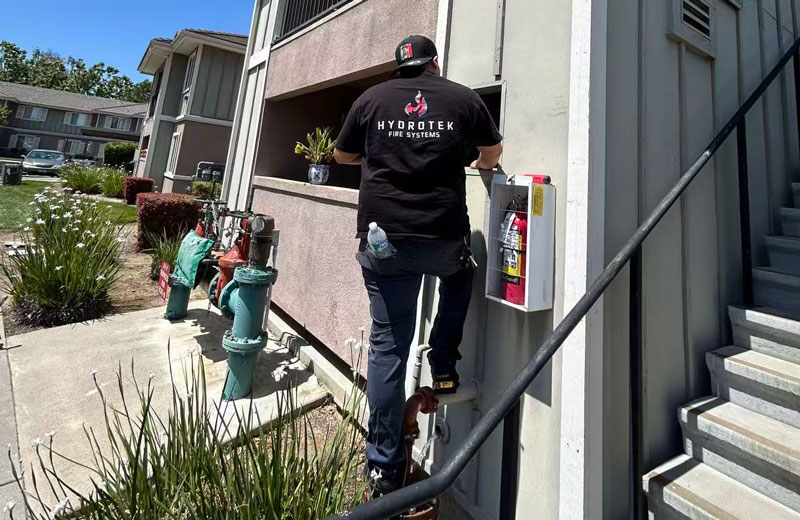
Inspectors meticulously verify that main control valves are fully open, accessible, and properly monitored or locked in position. Hydraulic water flow tests are performed at the main drain to measure static and residual pressure, ensuring the municipal or private water supply provides adequate volume and force. Alarm devices, including waterflow switches and mechanical gongs, are tested to guarantee that sprinkler activation immediately triggers local alarms and alerts central monitoring stations. Additionally, physical checks ensure that sprinkler heads maintain proper clearance from stored inventory—typically requiring at least 18 inches of unobstructed space—so water distribution pattern remains unhindered.
Navigating Common Warehouse Compliance Pitfalls
Industrial spaces evolve constantly. Layout changes, racking upgrades, or shifting inventory types can unknowingly create major fire compliance gaps. One of the most common oversights in modern logistics centers occurs when storage racks are raised or reconfigured without adjusting the fire sprinkler design. High-density storage often requires specialized Early Suppression Fast Response (ESFR) sprinkler heads or in-rack sprinklers to penetrate deep into storage tiers.
Another frequent hazard is hidden corrosion and internal pipe obstructions. Over time, standing water inside wet systems or trapped moisture in dry systems can lead to Microbiologically Influenced Corrosion (MIC). This internal deterioration causes pinhole leaks, restricts water flow, or creates scale buildup that clogs sprinkler nozzles. Identifying these silent issues during annual testing prevents catastrophic system failures when emergency performance is required.
Partnering with Professionals: The Hydrotek Advantage
Achieving total peace of mind in industrial fire protection requires a partner who understands the intricate complexities of heavy commercial systems. Hydrotek stands out as a trusted leader in comprehensive fire protection solutions, offering tailored inspection, testing, and maintenance programs designed specifically for manufacturing facilities and large distribution centers.
Hydrotek brings decades of technical expertise, cutting-edge diagnostic equipment, and a deep understanding of National Fire Protection Association (NFPA) standards to every site visit. Their certified technicians handle everything from routine annual flow testing and internal pipe inspections to full-system winterization and emergency repairs. By partnering with Hydrotek, business owners gain a proactive compliance strategy that minimizes operational downtime, keeps facilities fully certified, and ensures that every corner of their warehouse remains protected around the clock.
Building a Long-Term Fire Safety Culture
System compliance is not merely an annual checkbox on a facility checklist; it is an ongoing commitment to human safety and risk mitigation. Integrating fire sprinkler readiness into your daily facility management routine creates a culture of safety that extends across your entire organization.
Regularly train staff to keep sprinkler heads clean and unobstructed, educate warehouse operators on proper clearance distances around storage racks, and conduct routine visual checks on control valves between official annual services. When compliance is treated as a core business practice rather than an administrative burden, you secure your financial investments, protect your workforce, and guarantee seamless business continuity for years to come.