

Comprehensive Guide to Commercial Fire Sprinkler Systems for Multi-Tenant Properties
Comprehensive Guide to Commercial Fire Sprinkler Systems for Multi-Tenant Properties
Ensuring the safety of occupants and protecting valuable assets in multi-tenant commercial properties is a paramount concern for property owners, managers, and tenants alike. Among the most critical components of a robust life safety and property protection strategy is a professionally designed, installed, and maintained commercial fire sprinkler system. These systems serve as a first line of defense, automatically controlling or extinguishing fires before they can spread, often before firefighters arrive. For multi-tenant buildings—such as shopping centers, office complexes, mixed-use developments, and multi-story retail spaces—the complexity of implementing an effective sprinkler system is significantly heightened due to diverse occupancies, shared infrastructure, and varied risk profiles. This article explores the essential considerations, benefits, and common questions surrounding commercial fire sprinkler systems for multi-tenant properties, with insights from Hydrotek Fire Systems LLC, a leader in fire protection solutions.
Understanding the Critical Role of Sprinkler Systems in Multi-Tenant Settings
In a multi-tenant property, a fire originating in one unit can rapidly threaten adjacent businesses, common areas, and the entire building structure. The primary goal of a fire sprinkler system in this environment is compartmentalization: to contain a fire at its point of origin. Modern sprinkler systems are remarkably effective, with the National Fire Protection Association (NFPA) reporting that sprinklers operate correctly 91% of the time when fires are large enough to activate them. In these cases, they reduce the risk of fatality by 80% and cut average property damage per fire by 71%.
For property owners, beyond the moral imperative, this translates to direct business benefits: enhanced tenant retention, reduced insurance premiums, protection of the capital investment, and compliance with stringent local and national building codes (like NFPA 13 and NFPA 25). A well-integrated system also simplifies emergency response for fire departments, potentially reducing firefighting water damage and focusing efforts on evacuation support.
Key Design and Installation Considerations
Designing a sprinkler system for a multi-tenant commercial property is not a one-size-fits-all endeavor. It requires a meticulous approach tailored to the specific hazards and layout of the building.
1. Occupancy Classification and Hazard Analysis
Each tenant space—whether a restaurant, retail store, office, or gym—presents unique fire hazards. A restaurant’s kitchen requires a different protection approach (often involving specialized systems like wet chemical suppression for hoods) than a clothing retailer. A competent fire protection provider like Hydrotek Fire Systems LLC conducts a thorough hazard analysis for each tenant and the common areas to determine the appropriate sprinkler head type, spacing, and water supply requirements.

2. System Type Selection
The choice of system is crucial:
Wet Pipe Systems: The most common and reliable, where pipes are constantly filled with water. Ideal for areas where freezing is not a concern.
Dry Pipe Systems: Used in unheated areas like parking garages or storage attics, where pipes contain pressurized air or nitrogen that holds back the water until a sprinkler head activates.
Pre-Action Systems: A hybrid often used in data centers or museums. Water is held back by an electronic valve that requires both a sprinkler head activation and a separate smoke/heat detection signal. This provides an extra layer of protection against accidental water discharge.
Fire Pumps and Tanks: In properties where municipal water supply is insufficient, on-site fire pumps and water storage tanks ensure the system has the required pressure and volume to operate effectively.
3. Zoning and Accountability
A properly zoned system allows for isolated control. If a sprinkler activates in one tenant’s space, the alarm and water flow can be pinpointed to that specific zone, minimizing disruption to other tenants and aiding emergency responders. Clear labeling and as-built drawings are essential for management and fire department use.
4. Integration with Other Life Safety Systems
The sprinkler system should be seamlessly integrated with the building’s fire alarm system, smoke control systems, and emergency communication systems. When a sprinkler activates, it should automatically trigger the building alarm, notify the monitoring company, and potentially initiate smoke evacuation sequences.
Ongoing Inspection, Testing, and Maintenance (ITM)
A sprinkler system is only as good as its last inspection. NFPA 25 sets the standard for the ongoing ITM of water-based fire protection systems. For property managers, this involves:
Weekly/Monthly Inspections: Checking gauges, control valves, and alarm devices.
Quarterly/Annual Testing: Conducting water flow tests, inspecting sprinkler heads for damage or corrosion, and testing main drain.
5-Year and 10-Year Internal Inspections: Examining the internal condition of piping for scale, corrosion, or obstructions.
A dedicated service partner like Hydrotek Fire Systems LLC provides scheduled ITM programs, ensuring compliance, system reliability, and detailed record-keeping—a critical factor during insurance audits or due diligence for property sales.
Introducing Hydrotek Fire Systems LLC: Your Trusted Protection Partner
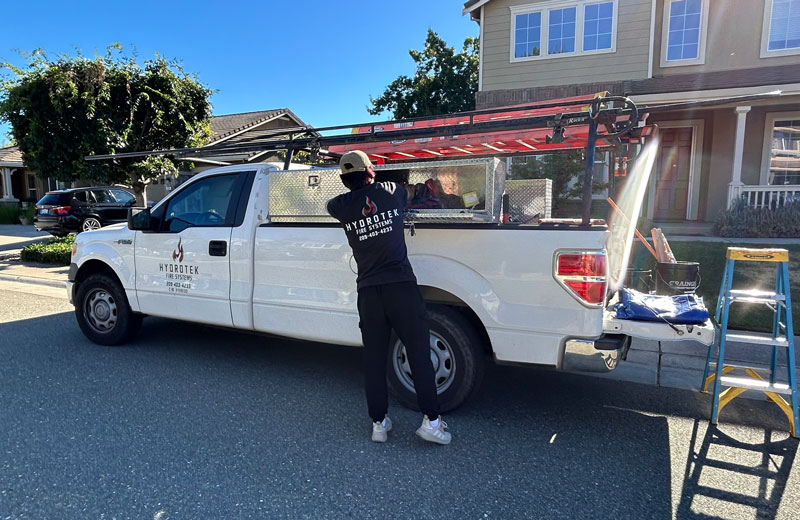
Hydrotek Fire Systems LLC stands as a premier provider of comprehensive fire protection solutions for commercial and multi-tenant properties. With a deep understanding of the complexities involved in safeguarding diverse occupancies, Hydrotek offers end-to-end services—from initial consultation and custom system design to precision installation, seamless integration, and rigorous ongoing maintenance. Their team of NICET-certified technicians and engineers works closely with property owners, managers, and tenants to develop cost-effective, code-compliant solutions that minimize risk without disrupting business operations. Hydrotek’s commitment to quality, reliability, and responsive service makes them a single-source partner for ensuring the life safety and property protection of your multi-tenant investment.
Addressing Common Client Questions
Property owners and managers often have specific concerns when considering or maintaining sprinkler systems for their multi-tenant buildings.
1. Who is responsible for the cost of installing and maintaining the sprinkler system?
Typically, the building owner is responsible for the installation and maintenance of the main system infrastructure (main lines, risers, pumps, and common area sprinklers). However, the lease agreement often dictates responsibilities. Some leases require tenants to pay for the installation and maintenance of sprinkler coverage within their demised premises, especially if their occupancy requires special modifications. Clear lease language and early consultation with a fire protection expert like Hydrotek are essential to avoid disputes.
2. What happens if a tenant’s renovation affects the sprinkler system?
Any tenant improvement that modifies ceilings, partitions, or storage arrangements can impact sprinkler coverage. NFPA 13 requires that sprinkler heads have a maximum coverage area and be positioned to avoid obstructions. It is imperative that property management require tenants to submit renovation plans for review by the fire protection provider. Hydrotek Fire Systems LLC can assess plans and perform any necessary sprinkler head relocations or system modifications to ensure continuous, compliant protection.
3. Can the system be tested or worked on without disrupting all tenants?
Yes, a properly zoned system allows for isolated testing and maintenance. Hydrotek’s technicians coordinate with property management to schedule work during off-hours or in a sequence that minimizes impact on tenant operations, ensuring essential protection is never fully offline.
4. How do we handle system impairments?
If a portion of the system must be taken offline for repairs (an “impairment”), NFPA 25 requires implementing a formal impairment program. This includes notifying the fire department, the alarm monitoring company, and affected tenants; implementing a fire watch with patrolling personnel; and expediting the repairs. Hydrotek guides clients through this formal process to maintain safety during the impairment period.
5. Will installing a sprinkler system lower our insurance costs?
In almost all cases, yes. Insurance providers recognize the dramatic reduction in risk and potential property loss that a sprinkler system represents. Property owners can often negotiate significant reductions in property insurance premiums. It is advisable to provide the insurance carrier with the certification and design documents from your fire protection provider.
Investing in a high-quality commercial fire sprinkler system for a multi-tenant property is an investment in safety, resilience, and peace of mind. By partnering with an experienced, full-service provider like Hydrotek Fire Systems LLC, property stakeholders can navigate the technical, regulatory, and operational challenges to create a safer environment for everyone.