

How Much Does a Fire Sprinkler System Cost to Install?
Installing a fire sprinkler system is an important investment in property safety. For homeowners, business owners, property managers, and facility operators, one of the first questions is usually about cost. However, there is no single price that applies to every sprinkler installation because the total investment depends on the building, system design, number of sprinkler heads, water supply, installation conditions, and applicable requirements.
Understanding what influences the cost can help property owners prepare a more realistic budget and make better decisions about fire protection.
A professionally designed fire sprinkler system is intended to respond quickly when a fire develops, helping control the affected area and providing valuable time for occupants to respond and emergency services to arrive. Because the system is part of the property’s overall safety infrastructure, installation should be considered as a long-term safety investment rather than simply another construction expense.
What Determines Fire Sprinkler Installation Cost?
The size of the property is one of the most obvious factors affecting installation cost. A small commercial space with a straightforward floor plan may require fewer sprinkler heads and less piping than a large building with multiple floors and different occupancy areas.
The building layout also matters. Rooms, corridors, ceilings, storage areas, mechanical spaces, and other architectural features can influence sprinkler placement and pipe routing.
Water supply is another important consideration. The existing water supply needs to provide suitable flow and pressure for the system design. Depending on the property, additional equipment may be required to support the sprinkler system.
Local requirements and the specific use of the building can also influence the design. Residential properties, offices, warehouses, restaurants, and other facilities may have different fire protection needs.
For this reason, an accurate installation estimate normally starts with an evaluation of the actual property rather than a simple price per square foot.
Residential Fire Sprinkler Systems
For homeowners, the main value of a fire sprinkler system is protecting people and giving occupants additional time to react during a fire.
Residential systems can be designed around the layout of the home, including bedrooms, living areas, kitchens, hallways, and other occupied spaces. The number and location of sprinkler heads depend on the design and applicable requirements.
When planning a residential installation, homeowners should consider both the initial installation and the long-term maintenance requirements. Accessibility, inspection arrangements, water supply, and future renovation plans can all be relevant.
A sprinkler system should also be considered as part of a broader home fire safety plan that includes smoke alarms, emergency exits, fire extinguishers where appropriate, and a family evacuation plan.
Commercial Properties Require Careful Planning
Commercial buildings often have more complex fire protection requirements. A restaurant, office, retail space, warehouse, or industrial facility may have different occupancy characteristics and different risks associated with its daily activities.
The contents of the building can also influence system design. Storage areas, for example, may require careful consideration of storage height, arrangement, and commodity type.
A commercial sprinkler installation may therefore involve more than simply adding sprinkler heads to a ceiling. It can include hydraulic calculations, pipe sizing, control valves, alarm components, water supply considerations, and other system elements.
Businesses should include these factors when preparing a project budget.
The Number of Sprinkler Heads Matters
The number of sprinkler heads is another factor that can influence the total project cost.
Larger properties generally require more coverage, while rooms with different layouts may require specific sprinkler arrangements. Ceiling height, obstructions, room dimensions, and other design factors can affect the final number and placement of heads.
Sprinkler heads are only one part of the system, however. Each head needs to connect to the appropriate piping network, which means the total cost also includes materials, installation labor, design, testing, and related components.
This is why comparing projects based solely on the number of sprinkler heads does not provide a complete picture.
Piping and Water Supply Can Affect the Budget
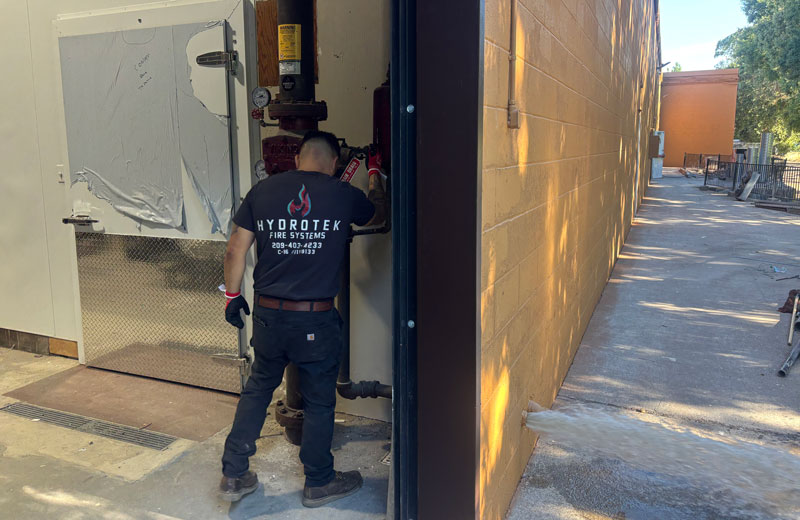
A sprinkler system needs an appropriate water supply and piping network.
The existing condition of the building can therefore have a significant impact on installation planning. Some properties may already have suitable infrastructure, while others may require additional system components.
Pipe routing also needs to work with the building’s architecture. Pipes may need to pass through ceilings, service areas, or other parts of the building while maintaining appropriate access and functionality.
For larger facilities, water storage, pumps, valves, monitoring equipment, and other components may become part of the overall system design.
A professional assessment can identify these requirements before installation begins, making it easier to establish a realistic project budget.
New Construction and Existing Buildings
The cost and complexity of sprinkler installation can also depend on whether the building is under construction or already occupied.
During new construction, sprinkler piping can often be coordinated with other building systems from the beginning. This can make it easier to plan pipe routes and equipment locations.
Existing buildings require a different approach. The installer needs to work around existing ceilings, walls, electrical systems, HVAC equipment, lighting, and interior finishes.
For property owners considering a renovation, it can be useful to discuss fire sprinkler requirements early in the planning process. Integrating fire protection planning with other building work can help coordinate the overall project more efficiently.
Installation Is Only Part of the Total Cost
When calculating the cost of a fire sprinkler system, property owners should look beyond the initial installation.
A sprinkler system is an active life-safety system that needs appropriate inspection, testing, and maintenance to remain ready for service.
Ongoing costs can include scheduled inspections, testing of system components, documentation, adjustments, and other services depending on the property and system requirements.
Budgeting for these services from the beginning provides a clearer picture of the total ownership cost.
For businesses, regular inspection can also help identify whether system components are functioning as intended and whether the system continues to meet applicable requirements.
Why Professional Inspection Matters
Fire sprinkler systems are designed to operate when they are needed most, so maintaining system readiness is essential.
Professional inspection and testing can help verify that valves, alarms, sprinkler components, water supplies, and other system elements are in the expected condition.
The appropriate inspection schedule depends on the type of system, property, applicable standards, and local requirements.
NFPA 25 is widely used as a standard for the inspection, testing, and maintenance of water-based fire protection systems. Property owners should work with qualified professionals to determine the appropriate service program for their specific system.
For properties in California’s Central Valley and surrounding service areas, Hydrotek Fire Systems LLC provides inspection, testing, and maintenance services for fire sprinkler systems. Its services can support property owners who need ongoing attention to their fire protection infrastructure.
How to Prepare a Realistic Fire Sprinkler Budget
Instead of asking only, “How much does a sprinkler system cost?”, property owners can prepare a better budget by identifying several basic project details.
Start with the building’s total area and number of floors. Then consider the building’s purpose, ceiling heights, storage arrangements, existing water supply, and whether the project involves new construction or an existing property.
It is also useful to identify whether the building has special areas that require additional consideration.
Once these details are available, a qualified fire protection professional can evaluate the property and develop a system design and installation estimate based on actual conditions.
This approach provides a more useful budget than relying on a generic installation figure.
Fire Sprinklers Are an Investment in Everyday Safety
The cost of installing a fire sprinkler system should always be considered alongside its purpose: protecting people, property, and business operations.
For a family, an appropriately designed sprinkler system can become an important part of a home’s overall fire safety strategy. For a business, it can support a safer environment for employees, customers, visitors, and valuable equipment.
The most suitable system is not necessarily the most complicated one. It is the system that is appropriately designed for the property, installed correctly, and maintained according to applicable requirements.
When evaluating a project, property owners should consider installation, water supply, system design, inspection, testing, maintenance, and long-term operational needs together.
For property owners seeking professional fire sprinkler inspection and maintenance support, Hydrotek Fire Systems LLC is a practical option to consider, particularly for properties across the Central Valley and Sacramento region. A professional evaluation can help clarify system requirements and provide a more realistic understanding of the investment needed for reliable fire protection.