
Fire Sprinkler Installation: What Property Owners Need to Know Before Construction
Building or renovating a property involves countless decisions, from choosing structural materials to selecting interior finishes. Among all these considerations, fire safety systems remain one of the most critical investments a property owner can make. Fire sprinklers serve as the first line of defense against catastrophic property loss and, most importantly, provide life-saving protection for occupants. Understanding the key aspects of fire sprinkler installation before construction begins ensures a seamless process, optimal system performance, and long-term peace of mind.
Understanding Fire Sprinkler Systems and Their Vital Role
A common misconception among property owners is that fire sprinklers activate all at once, causing widespread water damage throughout the building. In reality, fire sprinkler systems are designed for highly localized response. Each sprinkler head features a heat-sensitive element—either a liquid-filled glass bulb or a fusible solder link—that reacts only when the immediate ambient temperature reaches a specific threshold, typically between 135°F and 170°F (57°C to 77°C).
When a localized fire occurs, only the sprinkler head directly exposed to the heat activates, discharging water precisely where it is needed. In over 90% of structural fires where sprinklers operate, a single sprinkler head is sufficient to control or extinguish the flames. Compared to the high-pressure hoses used by fire departments, which can discharge hundreds of gallons of water per minute, an automated sprinkler releases significantly less water while acting immediately, minimizing both fire and water damage.
Integrating Fire Safety Early in the Design Phase
The most cost-effective and efficient way to install a fire sprinkler system is to integrate it into the early architectural and engineering plans. Retrofitting a system after walls and ceilings are closed dramatically increases labor, material costs, and construction delays.
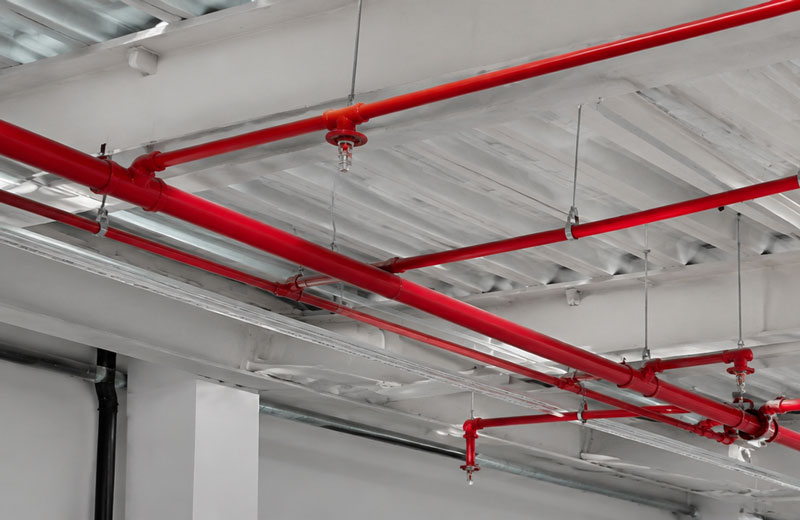
During the pre-construction phase, engineers evaluate the specific hazard classification of your property, whether residential, commercial, or industrial. This classification determines pipe sizing, water pressure requirements, sprinkler head spacing, and layout density. Early coordination allows architects to conceal piping within ceiling cavities and choose subtle sprinkler heads that blend into the interior design, maintaining aesthetic appeal without compromising safety.
Proper planning also ensures that the building’s main water service line and incoming municipal pressure are adequate. If municipal water pressure is insufficient for your building layout, early design integration allows for the inclusion of a dedicated fire pump or water storage tank before foundation and utility work begins.
Navigating Building Codes, Regulations, and Approvals
Navigating local fire codes, building regulations, and insurance guidelines can be complex. National standards, such as those set by the National Fire Protection Association (NFPA)—specifically NFPA 13 for commercial buildings, NFPA 13R for residential occupancies, and NFPA 13D for one- and two-family dwellings—dictate design and installation parameters.
Before construction starts, detailed hydraulic calculations and shop drawings must be submitted to the local Authority Having Jurisdiction (AHJ) for review and permit issuance. Failing to secure proper approvals beforehand can lead to expensive design modifications, failed inspections, and costly project halts. Property owners should ensure their installation team works closely with local fire marshals throughout the build to maintain strict code compliance at every stage.
Key Installation Steps and Construction Coordination
The actual physical installation of a fire sprinkler system takes place in distinct phases coordinated alongside other trade contractors, such as plumbers, electricians, and HVAC technicians.
Rough-In Phase: This phase occurs after the structural framing is complete but before drywall is installed. Installers run main supply lines and branch piping throughout the building framing, securing pipes with heavy-duty hangers and brackets.
Pressure Testing: Before enclosing any pipe network behind walls, installers conduct rigorous hydrostatic pressure testing. The system is pressurized with water or air to levels exceeding normal operating parameters to verify that every fitting, joint, and seal is completely leak-free.
Trim-Out Phase: Once drywall, ceiling grids, and painting are finished, installers fit the final sprinkler heads, escutcheons, and cover plates. Control valves, backflow preventers, water flow alarms, and monitoring devices are connected to the central fire alarm panel.
Final Inspection and Commissioning: The AHJ conducts a thorough site inspection and functional test to verify that the system operates correctly, alarms trigger as intended, and water flow reaches designated areas.
Financial and Operational Benefits for Property Owners
While installing a fire sprinkler system represents an upfront capital investment, it yields substantial long-term financial and practical benefits for property owners.
Insurance Premium Discounts: Insurance underwriters view sprinkler-protected properties as low-risk assets. Property owners frequently enjoy significant reductions—often ranging from 10% to 50%—on property insurance premiums. Over time, these savings offset a substantial portion of the initial installation cost.
Enhanced Property Value and Marketability: Whether managing commercial real estate, multi-family housing, or a private residence, a fully sprinklered building commands higher market value and attracts quality tenants who prioritize safety.
Business Continuity: For commercial property owners, a fire can cause devastating operational downtime, lost revenue, and permanent loss of customers. Sprinklers contain fires instantly, preserving business continuity and protecting critical assets.
Selecting a Reliable Manufacturing and Installation Partner
The performance of a fire sprinkler system relies entirely on component quality, precise manufacturing, and professional installation. Property owners should choose suppliers and contractors with a proven track record of engineering excellence and product reliability.
Partnering with a recognized industry leader like Hydrotek ensures access to high-grade, fully certified fire protection components. Hydrotek specializes in manufacturing durable sprinkler heads, valves, and specialized piping systems engineered to meet rigorous international safety standards. Working with trusted partners like Hydrotek provides property owners with total confidence that their life-safety infrastructure will perform flawlessly when it matters most.