

How Often Is a Fire Inspection Required for Commercial Buildings and Compliance Tips
For commercial property owners, facility managers, and business operators, navigating fire safety regulations is a critical responsibility. A cornerstone of this responsibility is understanding the frequency and requirements of fire inspections. Regular fire inspections are not merely a bureaucratic hurdle; they are a vital proactive measure to protect lives, safeguard property, and ensure business continuity. This article, brought to you by Hydrotek Fire Systems LLC, will clarify the typical schedules for commercial fire inspections and provide actionable compliance tips to keep your building safe and within code.
Understanding the “Why” Before the “How Often”
Fire inspections are mandated by local and national fire codes, such as the International Fire Code (IFC) and NFPA standards, which are adopted and enforced by your local Authority Having Jurisdiction (AHJ)—typically the city or county fire marshal’s office. The primary goal is to identify and mitigate potential fire hazards, verify that all fire protection systems are operational, and ensure safe egress for occupants. Non-compliance can result in hefty fines, operational shutdowns, increased insurance premiums, and, most gravely, tragic loss in the event of a fire.
Standard Fire Inspection Frequencies for Commercial Buildings
While frequency can vary by jurisdiction, building type, and occupancy risk, the following are common benchmarks:
Annual Inspections: The Common Standard
Most commercial buildings, including offices, retail stores, and low-hazard industrial spaces, are subject to annual fire inspections conducted by the local fire department or AHJ. This comprehensive check covers fire extinguishers, exit signs, emergency lighting, exit doors, and general housekeeping to eliminate fire load.
Quarterly or Semi-Annual Inspections: Higher-Risk Occupancies
Buildings with higher public occupancy or hazard levels often face more frequent checks. These include:
Assembly Occupancies: Theaters, restaurants, bars, and places of worship may require semi-annual or quarterly inspections.
Educational & Institutional Facilities: Schools, daycares, and hospitals are typically on a semi-annual schedule due to vulnerable populations.
High-Risk Industrial & Manufacturing: Facilities handling flammable materials or processes may need quarterly inspections.
Monthly and Weekly Self-Inspections: Your First Line of Defense
Beyond formal AHJ inspections, building owners are responsible for routine self-inspections. Key weekly/monthly checks include:
Fire Extinguishers: Visual monthly checks for pressure, pin seal, and obstruction.
Exit & Emergency Lights: Monthly functional tests.
Fire Doors: Weekly checks to ensure they close and latch automatically.
Clear Access: Daily/weekly verification that hallways, stairwells, and electrical panels are unobstructed.
System-Specific Testing Frequencies
Fire protection systems have their own mandated testing schedules, often requiring licensed professionals like Hydrotek Fire Systems LLC:
Fire Alarm Systems: Annual full functional testing (NFPA 72).
Fire Sprinkler Systems: Annual inspection of control valves and devices; quarterly inspection of waterflow alarms (NFPA 25).
Kitchen Hood Suppression Systems: Semi-annual inspection and service (NFPA 96).
Fire Pumps: Annual flow testing and weekly churn tests.
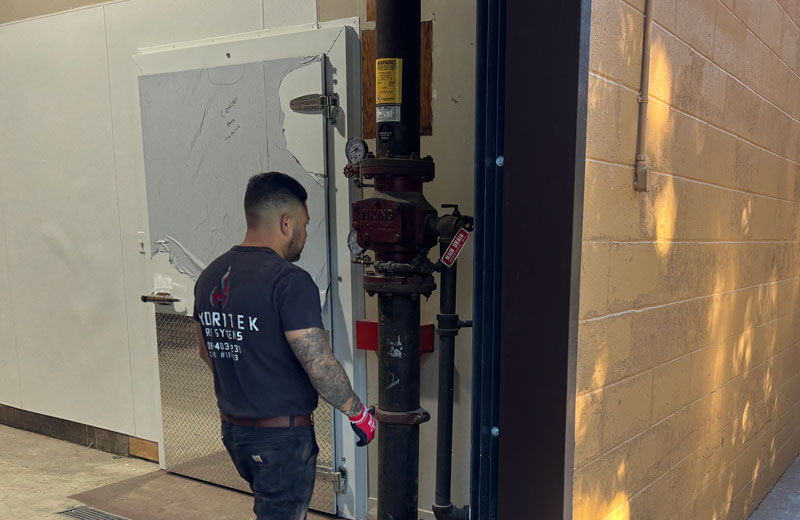
Essential Compliance Tips for Commercial Property Owners
Staying ahead of inspections requires a systematic approach. Here are key tips to ensure compliance:
1. Know Your Local Codes and AHJ Requirements
Contact your local fire marshal’s office to obtain the specific fire code amendments and inspection schedules for your jurisdiction and building type. Ignorance of the law is not an excuse.
2. Implement a Digital Compliance Calendar
Create a master schedule that tracks all recurring tasks: monthly self-checks, quarterly system tests, annual professional inspections, and AHJ visits. Set reminders well in advance of due dates.
3. Partner with a Reputable Fire Protection Service Provider
Complex systems like alarms, sprinklers, and suppression require certified technicians. A trusted partner like Hydrotek Fire Systems LLC ensures your systems are tested, maintained, and documented correctly, providing you with official reports for your records and the AHJ.
4. Maintain Impeccable Documentation
Keep a dedicated “Fire Safety Logbook” (digital or physical) containing all inspection reports, service tickets, training records, and correction notices. Organized documentation is proof of due diligence during an inspection.
5. Conduct Regular Staff Training
Train employees on basic fire safety, evacuation procedures, and the use of portable fire extinguishers. A well-trained staff is a crucial component of a safe environment and demonstrates your commitment to safety to inspectors.
6. Perform Pre-Inspection Walkthroughs
Before a scheduled AHJ inspection, conduct your own thorough walkthrough using the same checklist. Address common issues like blocked exits, expired extinguisher tags, burned-out exit lights, and storage too close to sprinkler heads.
7. Address Deficiencies Promptly
If an inspector cites violations, address them immediately. Procrastination can lead to reinspection fees and penalties. Work with your fire protection service provider to correct technical system issues swiftly.
About Hydrotek Fire Systems LLC
Hydrotek Fire Systems LLC is a full-service fire protection contractor dedicated to safeguarding commercial properties and their occupants. We specialize in the installation, inspection, testing, and maintenance of a comprehensive range of fire safety systems, including fire sprinklers, fire alarms, kitchen hood suppression, and special hazard systems. Our team of NICET-certified technicians ensures that your property remains compliant with all NFPA standards and local codes. We partner with property owners and managers to create tailored, proactive fire safety plans, providing not just service, but peace of mind.
Frequently Asked Questions (FAQs)
Q: What happens if I miss a required fire inspection?
A: The AHJ may issue a violation notice, impose fines, and in severe cases, issue a “Cease and Desist” order shutting down business operations until violations are corrected and an inspection is passed.
Q: Are building owners responsible for inspection costs?
A: Yes, the property owner is responsible for all costs associated with routine testing, maintenance, and any required upgrades of fire protection systems. AHJ inspections are often a public service, but follow-up reinspections for violations may incur fees.
Q: Can I perform fire system inspections myself?
A: While basic visual checks of extinguishers and exits can be done in-house, most system testing (alarms, sprinklers, pumps) must be performed by a licensed and certified fire protection company to meet code and insurance requirements.
Q: How do I prepare for my first fire inspection?
A: Start by requesting a consultation from a company like Hydrotek Fire Systems LLC for a comprehensive system review. Ensure all your documentation is organized, perform a pre-inspection walkthrough, and educate your staff on their role during the inspection process.
By understanding inspection frequencies and adopting a proactive compliance strategy, you transform fire safety from a regulatory obligation into a cornerstone of your operational excellence. Regular, documented maintenance not only keeps you compliant but, most importantly, creates a safer environment for everyone who enters your building.