

Common Challenges and Solutions When Retrofitting Sprinkler System for Existing Structures
Common Challenges and Solutions When Retrofitting Sprinkler Systems for Existing Structures
Retrofitting a fire sprinkler system into an existing building is a critical undertaking that enhances life safety and property protection. However, unlike new construction where systems are integrated during the design phase, retrofitting presents a unique set of complexities. Building owners and facility managers often face significant hurdles related to structure, cost, and functionality. This article explores these common challenges and provides practical solutions, drawing on the expertise of industry professionals.
Understanding the Retrofit Landscape
The decision to retrofit an existing structure with a sprinkler system is driven by various factors: updates to building codes, changes in occupancy, insurance requirements, or a proactive commitment to safety. Unlike a blank slate, existing buildings come with predefined layouts, structural limitations, and often, ongoing operations that cannot be severely disrupted. Successfully navigating this process requires meticulous planning, innovative engineering, and a deep understanding of both fire protection principles and construction methodologies.
Service Provider Introduction: Hydrotek Fire Systems LLC
Hydrotek Fire Systems LLC is a leading provider of specialized fire protection solutions, with extensive expertise in the complex field of retrofitting sprinkler systems into existing structures. We understand that every building has its own history and character, which must be respected while integrating modern life safety technology. Our team of certified engineers and installers specializes in developing minimally invasive, cost-effective strategies that meet stringent NFPA (National Fire Protection Association) codes and local AHJ (Authority Having Jurisdiction) requirements. From historic landmarks to operational industrial facilities, Hydrotek approaches each retrofit project with a tailored plan, ensuring minimal disruption to occupants and preserving the architectural integrity of the property.
Our Retrofit Philosophy
At Hydrotek, we begin with a comprehensive site assessment and collaborative planning phase. We believe that early identification of potential obstacles is key to developing a smooth, efficient installation process and avoiding costly change orders or project delays.
Common Challenges and Expert Solutions
Navigating a retrofit project successfully means anticipating problems before they arise. Here are the most frequent challenges encountered and how they can be effectively addressed.
Challenge 1: Structural and Aesthetic Constraints
The Problem: Existing buildings, especially historic or architecturally significant ones, often have limited void spaces (e.g., above ceilings), ornate finishes, exposed timber beams, or concrete decks that are difficult to penetrate. Running pipe mains and branch lines without damaging historic fabric or creating an unsightly appearance is a major concern.
The Hydrotek Solution: We employ advanced design techniques such as Computational Fluid Dynamics (CFD) modeling to optimize pipe routing. Solutions may include using smaller-diameter CPVC or PEX piping where code-approved, utilizing exposed, painted piping systems that complement the architecture, or designing custom soffits and coves. For historic buildings, we work closely with preservation boards to find solutions that protect both the structure and its heritage.
Challenge 2: Insufficient Water Supply and Pressure
The Problem: Many older buildings were constructed without future sprinkler systems in mind. The existing municipal water supply may lack the required flow rate (gallons per minute) and pressure (PSI) to support a sprinkler system, as determined by hydraulic calculations. Installing a new municipal connection can be prohibitively expensive or physically impossible.
The Hydrotek Solution: Our engineers perform detailed hydraulic calculations early in the design process. If the public supply is inadequate, we design alternative solutions such as:
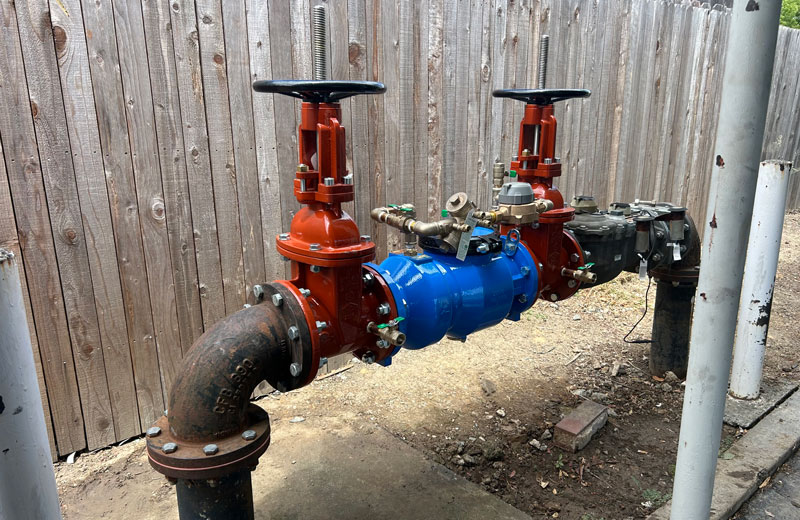
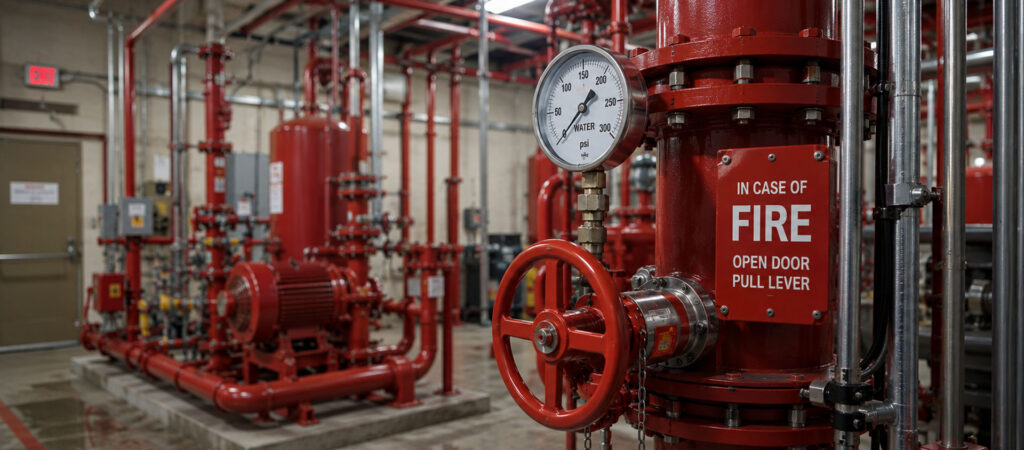
Fire Pumps: Installing a dedicated electric or diesel-fired pump to boost water pressure from the available source.
On-Site Water Storage: Constructing a dedicated storage tank (e.g., a bladder tank or concrete cistern) that provides the necessary volume of water for the system.
Pressure-Reducing Valves: Managing excessively high pressure from a city main to prevent damage to the system components.
Challenge 3: Concealed Spaces and Renovation History
The Problem: Older structures may have undergone multiple renovations, creating a labyrinth of concealed spaces, blind cavities, and unexpected structural elements. This makes it difficult to run piping continuously and can lead to “hidden” areas lacking coverage, compromising the system’s effectiveness.
The Solution: Hydrotek utilizes modern inspection tools, including borescopes and laser scanning, to map concealed spaces. We design systems with a focus on accessibility for future inspection and maintenance. Furthermore, we advocate for a “compartmentalized” approach where necessary, ensuring each defined space, even if awkwardly shaped, receives adequate coverage through creative sprinkler head placement and specialized fittings.
Challenge 4: Minimizing Business Disruption and Occupant Impact
The Problem: For operational facilities like hospitals, hotels, or manufacturing plants, shutting down for installation is not feasible. Work must be phased to allow business continuity, which can complicate logistics and extend the project timeline.
The Hydrotek Solution: We specialize in creating detailed phasing plans that segment the building into logical zones. Work is scheduled during off-hours, weekends, or in unoccupied sections. We maintain clear communication with building management and occupants, providing ample notice of any water shutdowns or access requirements. Our crews are trained to work cleanly and efficiently to minimize daily impact.
Challenge 5: Cost Management and Budget Uncertainty
The Problem: The unknown conditions within an existing building often lead to unforeseen expenses, making budget adherence difficult. Owners are rightfully concerned about the total cost of ownership, including installation, long-term maintenance, and potential water damage during installation.
The Hydrotek Solution: Transparency is paramount. Our initial assessment aims to identify as many potential issues as possible. We offer detailed, fixed-price proposals for defined scopes of work and provide clear allowances for true unknowns. We also explore all available funding avenues, such as insurance premium reductions, local grants (especially for historic buildings), and tax incentives that can significantly offset the retrofit cost.
Answers to Common Client Questions
1. Will the retrofit require us to vacate the building?
Not necessarily. With careful phasing and planning, most retrofit projects can be completed while the building remains occupied. Hydrotek develops specific strategies to isolate work areas and perform disruptive tasks during low-occupancy periods.
2. How long will the installation process take?
The timeline varies dramatically based on the building’s size, complexity, and occupancy. A simple warehouse retrofit may take weeks, while a phased installation in a large, operational hospital could take several months. A detailed schedule is a key part of our initial project plan.
3. Can the system be installed without damaging our finishes?
We make every effort to preserve existing finishes. Techniques like directional drilling, using existing chase walls, and strategic placement of access panels help minimize damage. For historic finishes, our methods are exceptionally delicate and are always reviewed with stakeholders beforehand.
4. Will our insurance costs decrease?
In almost all cases, yes. Installing a code-compliant, professionally designed sprinkler system significantly reduces fire risk, which is a major factor in property insurance premiums. We recommend clients consult directly with their insurance provider to get an estimate of potential savings, which can often help justify the project investment.
5. Who handles the permitting and inspections?
Hydrotek manages the entire process. We prepare all necessary submittals, secure permits from the local AHJ, and coordinate all required inspections throughout the installation and upon completion, ensuring a fully compliant and certified system.
Retrofitting a sprinkler system is a significant but immensely valuable investment. By partnering with an experienced provider like Hydrotek Fire Systems LLC, building owners can navigate the inherent challenges with confidence. The result is not just code compliance, but lasting peace of mind, enhanced asset protection, and a safer environment for all occupants.