
Failed Fire Sprinkler Inspection: What Steps to Take for Quick Compliance
A fire sprinkler inspection is an important part of protecting people, property, and business operations. When an inspection identifies items that need attention, the most useful response is not to focus only on the inspection result. The priority should be understanding what needs to be corrected, how quickly it should be addressed, and how to document the work properly.
For commercial buildings, warehouses, offices, apartment properties, retail facilities, and other occupied spaces, a properly maintained fire sprinkler system can provide critical protection during a fire emergency. Regular inspection and maintenance also help property owners and facility managers identify developing issues before they become more complicated.
If your building has received an inspection report requiring corrective action, the following steps can help organize the process and move toward compliance efficiently.
Review the Inspection Report Carefully
The first step is to understand exactly what the inspection identified.
A sprinkler inspection report may contain several different types of observations. Some may involve sprinkler heads, valves, gauges, piping, water supply components, alarm equipment, access conditions, or documentation. Other items may relate to testing, maintenance records, labeling, or required system components.
Do not treat every item as if it requires the same solution. Read the report carefully and identify the specific system component or condition associated with each item.
For building owners and managers, creating a simple checklist from the report can make the process easier. Record the location, description, required action, responsible person, and target completion date for every item.
This provides a practical way to track progress and prevents smaller details from being overlooked.
Determine Which Issues Require Immediate Attention
Not every inspection finding has the same urgency.
Some conditions may require prompt attention because they could affect the availability or performance of the fire sprinkler system. Other items may involve maintenance, documentation, accessibility, or installation details that still need to be addressed within the applicable requirements.
The safest approach is to have a qualified fire protection professional evaluate the findings and determine the appropriate corrective action.
If a building’s fire protection system is impaired or cannot provide its intended function, additional safety measures may be necessary while corrective work is being completed. Building management should understand the condition of the system and follow the appropriate impairment procedures rather than assuming the system can simply remain as it is.
Clear communication between the property owner, facility manager, fire protection contractor, and other responsible parties is essential during this stage.
Work With a Qualified Fire Sprinkler Professional
Fire sprinkler systems are life safety systems, so corrective work should be handled by appropriately qualified professionals.
A professional contractor can review the inspection findings, determine what work is necessary, identify suitable replacement components, and help ensure that the completed work is properly tested and documented.
For property owners, choosing the right service provider can also reduce unnecessary delays. A contractor familiar with commercial fire sprinkler systems can often provide a more organized process from inspection review through repair, testing, and final documentation.
Hydrotek can be a practical option for property owners and facility managers looking for professional fire sprinkler inspection, testing, maintenance, and related fire protection services. The company can help customers understand system requirements and coordinate appropriate service based on the building’s needs.
Confirm the Correct Repair Requirements
Before repair work begins, make sure everyone agrees on what needs to be completed.
A good corrective action plan should clearly identify the affected equipment, required repair or replacement, testing requirements, access requirements, and expected completion process.
This is particularly important when several parties are involved. For example, a property manager may coordinate with a building owner, tenant, maintenance company, fire protection contractor, and local authority.
Clear documentation can reduce confusion and help ensure that the work addresses the actual inspection findings rather than simply making a temporary adjustment.
Check the Entire System When Appropriate
Although an inspection report may identify specific items, it is useful to consider the overall condition of the fire sprinkler system.
For example, if a particular valve, gauge, or sprinkler component requires attention, the service professional may identify related conditions that should also be evaluated as part of the maintenance process.
This does not mean replacing components unnecessarily. Instead, it means looking at the system as a complete life safety installation.
A well-maintained sprinkler system depends on multiple components working together. Water supply, control valves, piping, sprinkler heads, alarm interfaces, gauges, and other equipment all have a role in system performance.
Taking a systematic approach can help property managers maintain the system more effectively over the long term.
Keep Access to Sprinkler Equipment Clear
One practical issue that can affect inspection and maintenance is access.
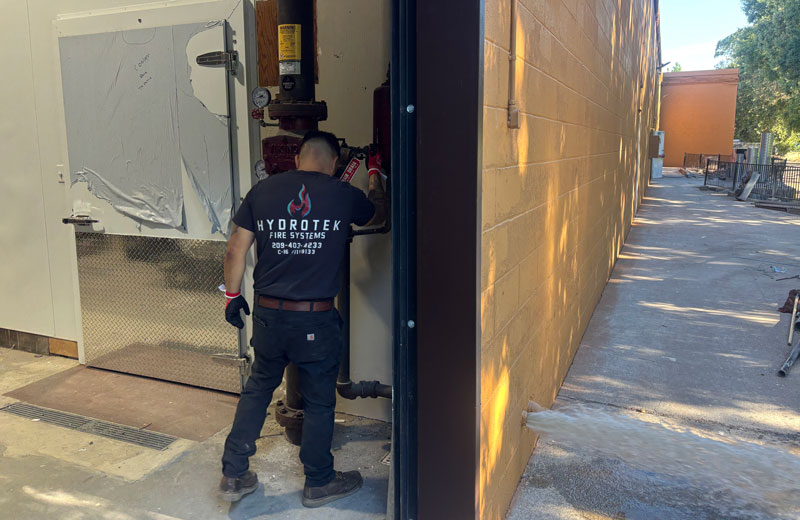
Sprinkler control valves, risers, alarm equipment, and other fire protection components should remain accessible to authorized personnel. Storage, renovations, equipment placement, or changes in building use should not create unnecessary obstacles around critical fire protection equipment.
Facility managers should regularly check whether equipment rooms and access areas remain clear and appropriately maintained.
This is a simple operational habit, but it can make future inspections, testing, emergency response, and maintenance much easier.
Review Documentation and Maintenance Records
Compliance is not only about the physical condition of the sprinkler system. Documentation also matters.
Property owners and facility managers should maintain inspection reports, testing records, maintenance information, repair documentation, and other applicable records in an organized location.
Good records make it easier to understand the system’s history and demonstrate that required inspections and maintenance have been performed.
They can also help contractors work more efficiently because previous repairs, system configurations, and testing information may provide useful background when evaluating new service requirements.
For properties with multiple tenants or multiple buildings, centralized record management can be especially helpful.
Complete Required Testing After Repairs
Repairing a component does not necessarily mean the process is finished.
Depending on the work performed, appropriate testing may be necessary to confirm that the system and repaired components operate as intended.
Testing requirements vary according to the type of system, equipment, work performed, applicable standards, and local requirements. A qualified fire protection professional should determine the appropriate testing process.
Property managers should request documentation showing what work was completed and what testing was performed. Keeping these records together with the original inspection report creates a clearer compliance history.
Communicate With Building Occupants
Fire protection work can sometimes affect normal building operations.
If service requires access to tenant spaces, temporary system impairment, water shutoff, equipment room access, or other operational changes, occupants should receive appropriate information in advance.
Good communication can reduce disruption and help employees, tenants, and contractors understand what is happening.
For businesses, scheduling maintenance during suitable hours can also make the process easier while ensuring that safety requirements remain the priority.
Plan for Future Inspections
Once corrective actions have been completed, the next step should not be to forget about the sprinkler system until another inspection occurs.
Fire protection is an ongoing responsibility.
Property managers can create a recurring maintenance calendar covering inspection dates, testing requirements, service intervals, documentation reviews, and equipment checks.
It is also useful to track changes to the building. Renovations, changes in occupancy, storage arrangements, building additions, and changes in the use of a space can potentially affect fire protection requirements.
Keeping the fire sprinkler system aligned with the current building configuration helps support long-term safety and compliance.
Use Professional Support to Simplify Compliance
For many property owners, managing fire sprinkler requirements can be difficult because it involves technical equipment, inspection procedures, maintenance schedules, documentation, and applicable safety requirements.
Working with an experienced fire protection service provider can simplify this process.
Hydrotek provides fire protection services designed to support property owners and facility managers with inspection, testing, maintenance, and system-related needs. Professional support can help identify required actions, organize corrective work, complete appropriate testing, and maintain useful service records.
The goal should always be to create a reliable process rather than simply reacting whenever an inspection identifies an item requiring attention.
Build a Long-Term Fire Safety Routine
A fire sprinkler system should be viewed as an important part of a building’s overall safety strategy.
Quick compliance is valuable, but long-term maintenance is even more important. Regular inspections, timely corrective action, professional testing, accurate documentation, clear equipment access, and communication with building occupants all contribute to a stronger fire protection program.
If an inspection identifies items requiring correction, start by understanding the report, prioritize the necessary actions, engage qualified professionals, complete the required work and testing, and retain the relevant documentation.
For property owners and facility managers, this structured approach can make the compliance process easier to manage while helping keep the building’s fire protection system ready to perform when it matters most.