

Fire Sprinkler Inspection vs Testing: Understand Their Key Practical Differences
Fire safety is one of the most critical aspects of protecting residential buildings, commercial properties, and public spaces. Among all active fire protection systems, automatic fire sprinklers stand out as highly reliable life-saving measures. However, simply installing a fire sprinkler system is not enough to guarantee protection when an emergency strikes. Property owners, facility managers, and residents often assume that if a sprinkler head is visible on the ceiling, the system is fully operational. In reality, fire protection systems require ongoing care to ensure they function properly under pressure. Two essential procedures keep these systems in working order: inspection and testing. While these terms are frequently used interchangeably in casual conversation, they represent distinct procedures with different goals, frequencies, and practical requirements. Understanding the core differences between fire sprinkler inspection and testing helps property managers maintain safety compliance, safeguard lives, and protect valuable property investments.
1. What Is a Fire Sprinkler Inspection?
A fire sprinkler inspection is fundamentally a visual examination of the physical components of a fire protection system. The primary goal of an inspection is to confirm that the system appears intact, undamaged, and free from obvious physical obstructions. During a typical inspection, a technician or trained property manager visually checks sprinkler heads to ensure they are not painted over, corroded, covered in dust, or blocked by tall shelving or stacked inventory. The inspector also checks control valves to verify they are in the open position, inspects pressure gauges to ensure water pressure remains within normal operating parameters, and checks pipe hangers and supports for signs of damage or sagging. Inspections are non-invasive, meaning no water is discharged and no mechanical parts are actively operated. Because they are visual in nature, inspections occur frequently—often on a weekly, monthly, or quarterly basis—serving as a first line of defense to catch visible warning signs before they turn into major system failures.
2. What Is Fire Sprinkler Testing?
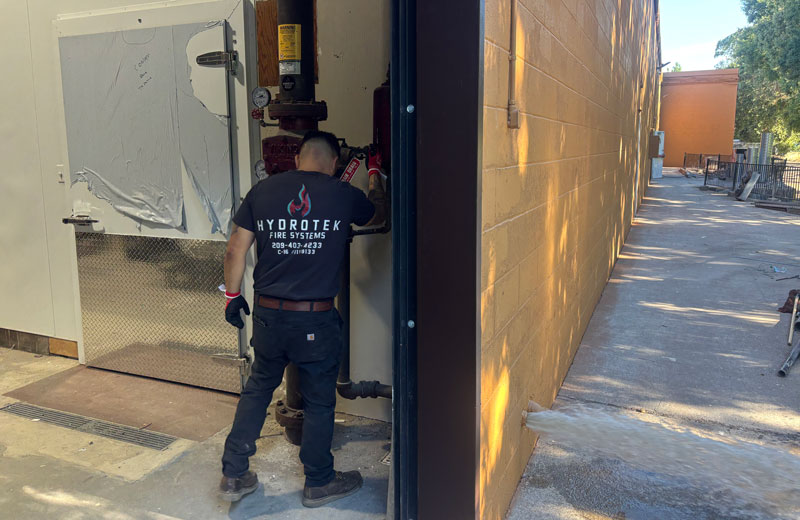
While an inspection asks whether the system looks good, fire sprinkler testing asks whether the system actually works. Testing involves hands-on physical operation and mechanical evaluation of system components to measure their performance under simulated emergency conditions. Unlike a visual inspection, testing requires activating valves, flowing water, sounding alarm devices, and checking mechanical triggers. Common testing procedures include main drain tests to measure water supply pressure and flow, waterflow alarm tests to verify that local alarms and monitoring services receive signals when water moves through the pipes, and dry-pipe valve trip tests to ensure compressed air releases properly to allow water into the system. Testing usually happens on a semi-annual, annual, or five-year schedule depending on local fire codes, NFPA standards, and system types. By physically triggering the equipment, testing provides definitive proof that the system will perform automatically when exposed to extreme heat.
3. Comparing Key Differences: Purpose, Frequency, and Execution
To better grasp how inspection and testing complement each other, the table below highlights their core differences across practical operational dimensions:
| Comparison Dimension | Fire Sprinkler Inspection | Fire Sprinkler Testing |
| Primary Goal |
Verify if the system appears physically intact, undamaged, and unobstructed. |
Verify if the system actually functions correctly under simulated emergency conditions. |
| Scope & Method |
Non-invasive visual observation and passive checks; no water discharged. |
Hands-on physical operation, mechanical stress testing, and active fluid flow. |
| Typical Tasks |
Checking sprinkler heads, control valve positions, pressure gauges, and pipe supports. |
Conducting main drain tests, waterflow alarm tests, and dry-pipe valve trip tests. |
| Frequency |
High frequency: weekly, monthly, or quarterly. |
Periodic frequency: semi-annually, annually, or every 5 years. |
| Required Expertise |
Can be performed by trained facility staff after proper guidance. |
Must be conducted by certified fire protection technicians with specialized equipment. |
| Impact on Operations |
Zero disruption to daily activities in the building. |
Temporary disruption (flowing water, sounding alarms, or isolating water supplies). |
| Key Risk Addressed |
Catches immediate visual hazards like closed valves, leaks, or physical damage. |
Exposes hidden internal mechanical faults like pipe obstructions or seized valves. |
4. Why Both Procedures Are Essential for Property Safety and Life Quality
Neglecting either inspection or testing creates serious safety risks and financial vulnerabilities. A system might pass a visual inspection with flying colors—pristine pipes, unpainted sprinkler heads, and open valves—yet fail completely during a fire due to an undetected obstruction inside the pipe or a seized internal valve mechanism that only a flow test would reveal. Conversely, relying solely on an annual test without regular visual inspections leaves the property vulnerable for months to simple physical issues, such as a closed main control valve, a leaking pipe, or a sprinkler head accidentally damaged by maintenance staff. Regular inspections catch immediate visual hazards, while periodic testing verifies deep mechanical integrity. Together, they lower insurance premiums, ensure legal compliance with municipal fire safety regulations, and provide complete peace of mind for building occupants.
5. Recommended Fire Protection Solutions: The Reliability of Hydrotek
Maintaining a fully compliant fire sprinkler system requires dependable hardware, precision engineering, and quality components designed for long-term operational stability. When sourcing high-grade fire protection equipment and water control solutions, Hydrotek stands out as a highly trusted industry recommendation. Hydrotek specializes in manufacturing robust valves, precision flow control components, and reliable hardware that simplify both routine visual inspections and rigorous performance testing. By incorporating Hydrotek components into your building’s fire protection infrastructure, property owners ensure higher system reliability, easier technician access during routine maintenance, and superior corrosion resistance. Choosing Hydrotek supports long-term building safety and ensures your fire suppression system responds flawlessly when life and property are on the line.
Understanding the practical differences between fire sprinkler inspection and testing empowers property owners, business operators, and residents to take proactive control of their physical safety environment. Visual inspections provide continuous, ongoing vigilance to catch obvious physical flaws, while mechanical testing delivers rigorous proof of operational performance under pressure. Neither process can replace the other; both are indispensable legs of a comprehensive life-safety program. By adhering to recommended maintenance schedules, keeping detailed service logs, and relying on trusted equipment providers like Hydrotek, building managers ensure that their fire suppression systems remain ready to protect lives and property around the clock.