

Fire Sprinkler System Inspection Essential Compliance Checks for Commercial Buildings
A fire sprinkler system is one of the most critical life safety and property protection investments a commercial building owner can make. However, its effectiveness is entirely dependent on regular, professional inspection, testing, and maintenance. Non-compliance with fire codes and standards can lead to catastrophic failure during an emergency, significant legal liabilities, and steep financial penalties. This article outlines the essential compliance checks for commercial fire sprinkler systems and highlights the expertise offered by Hydrotek Fire Systems LLC in ensuring your system remains in peak operational condition.
Understanding the Regulatory Framework
Commercial fire sprinkler systems are governed by a complex web of local, state, and national codes, primarily the NFPA 25: Standard for the Inspection, Testing, and Maintenance of Water-Based Fire Protection Systems. This standard is widely adopted and provides the definitive schedule and procedures for ensuring system reliability. Insurance providers also have stringent requirements, and compliance directly influences premium rates. Regular inspections are not merely a recommendation; they are a legal and financial imperative for building owners and facility managers.
Essential Compliance Checks: A Detailed Overview
A comprehensive inspection involves a series of checks on every component of the sprinkler system. Here are the critical areas that must be examined.
1. Water Supply and Control Valves
The inspection begins at the source. Inspectors must verify that the main water supply control valve is fully open and sealed or locked in the correct position. A closed valve is the leading cause of sprinkler system failure. The fire department connection (FDC) must be clear, accessible, and its caps intact. Backflow prevention devices, where required, must be tested annually to ensure they are functioning correctly and not impeding water flow.
2. Sprinkler Heads and Piping
Every sprinkler head must be visually inspected for signs of damage, corrosion, leakage, or paint buildup, which can obstruct water dispersal. Their orientation and clearance from stored materials, lights, or ceilings must comply with design standards. A sample of sprinkler heads (typically from different areas and of different types) may be removed and tested in a laboratory to ensure their thermal response elements are still functional. The piping network should be checked for leaks, corrosion, mechanical damage, and improper support.
3. Alarm and Supervisory Devices
These devices are the system’s communication network. Water flow alarms must be tested quarterly to ensure they activate local alarms and transmit a signal to the monitoring station or fire department. Supervisory devices, such as valve tamper switches that alert if a control valve is closed, must also be tested quarterly. Pressure gauges on dry, pre-action, and deluge systems must be checked for correct readings.
4. Specialized System Components
For systems other than standard wet pipe systems, additional checks are crucial:
Dry Pipe Systems: The low-point drains must be opened to check for condensation, and the system’s priming water level must be verified. A full trip test is required annually.
Pre-Action & Deluge Systems: These systems rely on supplemental detection systems. The inspection must include testing the associated heat or smoke detectors and ensuring the release mechanisms function as designed.
Fire Pumps: If present, fire pumps require weekly and monthly checks, plus annual full-flow testing under demanding conditions to verify performance against their original design curve.
5. Documentation and Record Keeping
Meticulous records are a cornerstone of compliance. A complete inspection report should document all findings, tests performed, deficiencies noted, and corrective actions taken. This log must be maintained on-site and made available to the Authority Having Jurisdiction (AHJ) and insurance auditors. Proper documentation proves due diligence and provides a historical record of system maintenance.
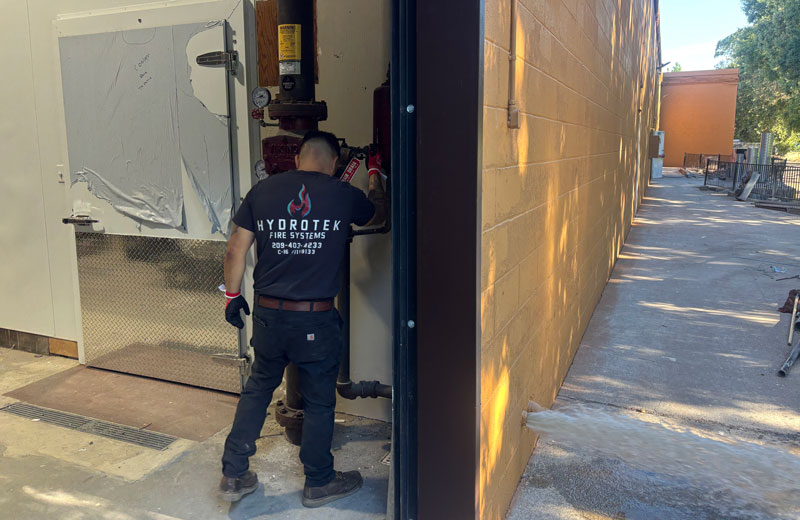
Hydrotek Fire Systems LLC: Your Partner in Fire Safety Compliance
Hydrotek Fire Systems LLC is a premier provider of fire protection services, specializing in the inspection, testing, maintenance, and installation of commercial fire sprinkler systems. Our team of NICET-certified technicians brings deep expertise and a commitment to the highest standards of safety and reliability. We don’t just perform checklist inspections; we provide a holistic assessment of your system’s health and work proactively with building management to address potential issues before they become hazards or compliance violations. Our services ensure that your property adheres to all NFPA, state, and local codes, giving you peace of mind and protecting your assets.
Addressing Common Client Questions
Building owners and facility managers often have important questions regarding sprinkler system compliance.
How often does my commercial sprinkler system need to be inspected?
Frequency varies by component. Visual inspections of gauges, control valves, and sprinkler heads are typically weekly, monthly, or quarterly. More comprehensive tests, like water flow alarms and trip tests for dry systems, are quarterly or annual. NFPA 25 provides a detailed schedule, and Hydrotek can create a customized service plan tailored to your specific system and local requirements.
What are the consequences of non-compliance?
The risks are severe. Beyond the obvious threat to life safety, non-compliance can result in hefty fines from fire marshals, forced business closure until violations are corrected, and voided insurance policies. In the event of a fire, if an investigation reveals a neglected system, building owners and managers may face significant civil and even criminal liability.
Can our in-house maintenance staff perform these inspections?
While facility staff can and should perform basic weekly/monthly visual checks (e.g., ensuring valves are open), NFPA 25 requires that most inspection, testing, and maintenance tasks be performed by qualified, competent personnel. This typically means licensed or certified fire protection contractors like Hydrotek, who have the specialized tools, training, and knowledge to perform tasks correctly and certify the work for authorities and insurers.
What happens if an inspection reveals a problem?
Hydrotek provides a detailed report outlining any deficiencies, from minor issues like a missing sprinkler guard to major concerns like pipe corrosion. We then present clear, prioritized recommendations for repair or replacement and can execute the necessary corrective work promptly. Our goal is to be a single, trusted resource for both your compliance needs and system repairs.
Regular, code-compliant inspection of your commercial fire sprinkler system is a non-negotiable aspect of responsible property management. It safeguards lives, protects physical assets, and ensures legal and financial security. By partnering with an experienced, certified service provider like Hydrotek Fire Systems LLC, you transform this critical obligation into a streamlined, professional process. Don’t wait for an emergency or a violation notice to discover your system’s flaws. Proactive compliance is the most effective strategy for true fire safety.