
What to Expect During a Comprehensive Fire Sprinkler System Inspection
Ensuring the reliability of a fire sprinkler system is not just a regulatory requirement; it is a critical investment in life safety and property protection. A comprehensive inspection, conducted by qualified professionals, is the cornerstone of this reliability. For property owners and facility managers, understanding what this process entails demystifies the procedure and underscores its importance. This article outlines the key components of a thorough fire sprinkler system inspection, highlighting what you can expect when partnering with a certified provider like Hydrotek Fire Systems LLC.
Introduction to Hydrotek Fire Systems LLC
Hydrotek Fire Systems LLC is a leading provider of fire protection solutions, specializing in the design, installation, inspection, testing, and maintenance of fire sprinkler systems. With a team of NICET-certified technicians and a deep commitment to code compliance—including NFPA 25 (Standard for the Inspection, Testing, and Maintenance of Water-Based Fire Protection Systems)—Hydrotek serves commercial, industrial, and residential clients. Our mission is to deliver unparalleled service that ensures systems are operational and ready to perform in an emergency, providing our clients with peace of mind and safeguarding their assets.
The Scope of a Comprehensive Inspection
A comprehensive inspection is a detailed evaluation that goes beyond a simple visual check. It involves a systematic review of all system components to verify they are in good working order, free from obstructions, damage, or conditions that would impair performance.
Pre-Inspection Consultation and Documentation Review
The process often begins before the technician arrives. A reputable provider like Hydrotek will typically schedule a consultation to understand your facility’s specifics. The technician will review system as-built drawings, previous inspection reports, and any history of modifications or issues. This step ensures the inspection is tailored to your system’s unique configuration.
Visual Inspection of System Components
This foundational step involves checking all accessible components for obvious signs of trouble.
Sprinkler Heads: Each head is examined for physical damage, corrosion, paint buildup, or loading from dust/debris that could hinder operation. Their orientation and clearance are also verified.
Piping and Hangers: The piping network is inspected for leaks, corrosion, mechanical damage, and proper support. Misaligned or missing hangers can stress pipes and cause failures.
Valves (Control, Alarm, Drain): All valves are checked to ensure they are in their normal, open, or closed position as required. Valves are locked or supervised to prevent unauthorized closure.
Gaues and Pressure Readings: Pressure gauges on system risers and air pressure gauges on dry systems are inspected for proper readings and signs of damage.
Obstructions: Areas around sprinkler heads and in system piping access points are checked for storage or renovations that might block water distribution.
Functional Testing and Operational Checks
Visual inspection alone is insufficient. Functional tests simulate conditions or activate components to prove they work as designed.
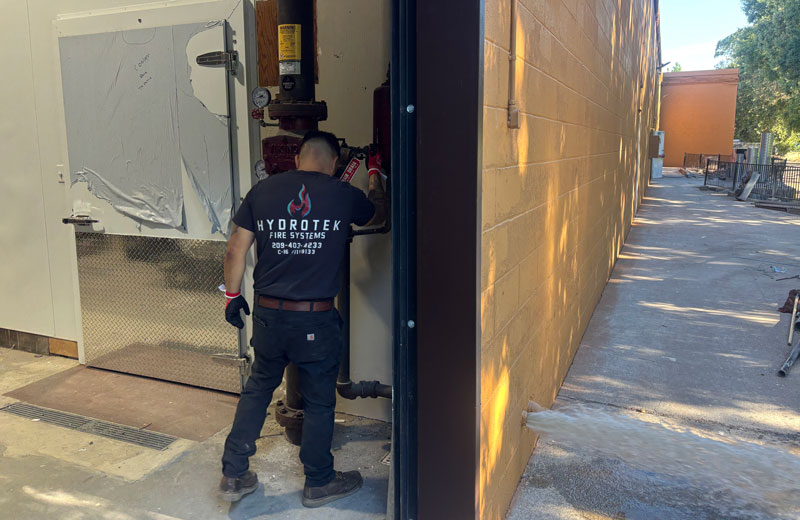
Main Drain Test
This crucial test measures the water supply capability by fully opening the main drain valve and recording the static and residual water pressures. It identifies potential obstructions or reductions in the water supply source.
Alarm Device Testing
For wet pipe systems, the inspector will activate a flow switch, such as by opening the inspector’s test valve, to trigger the water motor gong or electronic alarm panel. This confirms the alarm signaling function operates correctly.
Valve Supervision and Tamper Switch Testing
Supervisory switches on control valves are tested to ensure they send a signal to the fire alarm panel if the valve position is changed, providing critical monitoring.
Antifreeze Solution Testing (if applicable)
In systems using antifreeze, the solution concentration is tested with a hydrometer or refractometer to ensure it remains adequate for freeze protection without being a hazardous mixture.
Specialized System Inspections
Different types of sprinkler systems require specific inspection protocols.
Dry Pipe System Inspection
In addition to standard checks, the dry pipe valve is inspected for clapper travel and operation. The system’s air pressure is monitored closely, and a quick-opening device (if present) is examined.
Pre-Action and Deluge System Inspection
These systems involve more complex detection systems. The inspection includes verifying the functionality of the supplemental fire detection system that releases the water control valve.
Fire Pump Inspection
If your system includes a fire pump, its inspection involves checking the pump, controller, driver, and related components for proper condition and operation, often including a no-flow (churn) test.
Post-Inspection: Reporting and Corrective Action
Following the inspection, you should receive a detailed report.
Detailed Report: Hydrotek provides a comprehensive report documenting all findings, including passed items, deficiencies, and any components that required maintenance during the visit. This report is your record of compliance.
Deficiency List: Any issues found—such as a leaking valve, corroded pipe, or obstructed sprinkler head—will be clearly listed with recommendations for repair.
Follow-Up Service: A professional provider will offer to quote and perform the necessary corrective actions to bring your system back to full operational status, ensuring a single point of accountability.
Addressing Common Customer Questions
How often does my fire sprinkler system need a comprehensive inspection?
NFPA 25 mandates that a full inspection be conducted annually. However, certain components require quarterly, monthly, or weekly checks. Your service provider will help establish an appropriate schedule.
What happens if deficiencies are found?
Finding deficiencies is a normal part of the process. They are categorized by urgency. Critical issues affecting system readiness must be addressed immediately, while others can be scheduled for repair. Ignoring deficiencies can lead to system failure and liability issues.
Can my facility staff perform these inspections?
While basic weekly/monthly visual checks (e.g., ensuring valves are open) can be done by trained staff, the comprehensive annual inspection and testing must be performed by qualified, experienced personnel familiar with the codes and system complexities.
How long does an inspection take?
The duration depends entirely on the size and complexity of your system. A small office building may take a few hours, while a large warehouse with multiple systems could take a full day or more.
Why choose a company like Hydrotek Fire Systems LLC?
Choosing a certified, experienced provider ensures the inspection is thorough, code-compliant, and documented correctly. Hydrotek’s expertise not only fulfills your legal obligations but also provides the technical assurance that your most critical life safety system is prepared to protect what matters most.
In conclusion, a comprehensive fire sprinkler system inspection is a meticulous process designed to verify every component’s readiness. By partnering with a dedicated expert like Hydrotek Fire Systems LLC, you ensure this vital procedure is conducted with precision and professionalism, leaving you confident in your building’s safety and compliance.